Wednesday, February 23, 2011

Johnny Depp as Ed Wood in Ed Wood


It has been said that acting is all about making choices. The choices an actor makes will determine how well they perform their respective character. Johnny Depp is an actor who is known for making bold and risky choices in every role he takes, and that's what has made him one of the most exciting and popular actors working today. Depp has said that he draws his inspiration from images, people or other fictional characters to help base his characters. Some of his inspirations include the Rolling Stone rocker Keith Richards, in whom Depp said he based his most famous character, Captain Jack Sparrow. His performance as Ichabod Crane from Sleepy Hollow was said to be based partly on Angela Lansbury, because Depp thought Ichabod was a character who was very much in touch with his feminine side. In Edward Scissorhands, Depp perceived the character as behaving like a puppy, to help convey Edward’s fragile but lovable nature. Throughout his career Depp has excelled at playing these quirky outsider characters; characters that are often strange and don’t seem to belong in the world they live.
In Ed Wood, Johnny Depp plays a character that is an outsider of Hollywood, who desperately wants to get into the business of making his own films but has trouble finding studios to finance them. Depp’s real-life character, Edward D. Wood Jr., has famously been proclaimed as the Worst Film Director ever, but like every director he didn’t set out to make a bad film. He had a passion for film making that was almost unrivaled; it’s just that his passion blinded him to the fact that he really had no knowledge or talent as a director.
To help him portray this real-life person of Ed Wood, one might think that Depp would draw his insight from what he could learn about the real person (as he did for his roles in Donnie Brasco, Blow & Public Enemies), but there wasn’t a lot of material about the real Ed Wood. So Depp thought of three characteristics from three different sources that helped him develop his character of Ed Wood. These inspirations that Depp drew from have no connection to the real 1950's Hollywood hack director he’s portraying, but combined together they formed his character. His inspirations for the character were: the blind optimism of President Ronald Reagan, the smile of the Tin Man from The Wizard of Oz, and the voice of Casey Kasem – a popular American radio host.
The character of Ed Wood is one of the most optimistic people you’ll ever meet. After every first-take that he directed he would call cut and say it was “perfect!”, even if there were unintentional mistakes. In one of the movie’s funniest moments, Ed calls up the head of Warner Bros. Studio and asked what he thought of his first movie. We hear, “Worst movie you ever saw? Well my next one will be better!” Depp’s performance in this scene is hilarious because of his deadpan delivery. President Ronald Reagan was known for having a sort of “blind optimism” that prevented him from ever really seeing the problems of our country at the time; he’d only focus on the positive, just like Ed Wood.
The character of Ed Wood carries a very distinguishing overdrawn smile on his face throughout the movie, which makes him look like a puppet.  Depp’s inspiration for that aspect of the character came from the Tin Man from The Wizard of Oz, who always tried to maintain the biggest smile on his face throughout his ups and downs. For Ed Wood’s unique high-pitch voice, Depp listened to Casey Kasem, who was a popular American radio host and did numerous cartoon voices. Ed Wood’s voice is almost completely unrecognizable from Depp’s own voice; and it helps maintain the character’s relentlessly upbeat attitude throughout the movie.
If another actor would have portrayed Ed Wood, they most likely would have worried about making the character realistic and bringing many different layers to the performance. Johnny Depp’s performance as Ed Wood is certainly not realistic, and he’s also completely one-note throughout the entire movie. Only an actor as courageous as Depp would have taken these risks. Depp says he took the approach he did with his character because, “Even if you’re playing a sort of heightened character and living inside of a heightened reality, you can apply your own truths to the character. But it certainly is more fun. I’ll tell you what’s more fun. It’s just being able to try something that maybe hasn’t been beaten to death. To try and do something a little bit different- What’s the risk? The risk is you fall flat on your face or make an ass of yourself and get fired.”(link)
Johnny Depp certainly didn’t fall flat on his face with his performance as Ed Wood, and his unique one-note performance made Ed Wood one of the most endearing characters in all of movies. Depp, like a lot of Hollywood actors, is a good looking man, but unlike most actors he never exploits his looks for his character. Depp does the opposite, he’ll go out the way to make himself uglier for his character. He certainly did that with Ed Wood with his high-pitch voice and his freaky smile throughout the movie. Also, the character of Ed Wood is a transvestite who loves to dress up in woman’s clothing and has particular fetish for Angora sweaters. Whenever his character appears in woman’s clothing, Depp’s performance is notably calmer and you can tell that his character really is most comfortable wearing woman’s clothing.
I'm always looking forward to the next Johnny Depp performance. He’s willing to take risky choices and draw inspiration from unconventional sources. He's created some of the most memorable film characters ever, including my favorite, Ed Wood. 

Wednesday, February 16, 2011

James Dean as Jim Stark in Rebel Without A Cause


While there had been other teenage characters and performances in movies before Rebel Without a Cause was released in 1955, they’ve mostly been forgotten, and James Dean’s performance is now affectionately known as the first real teenager performance. Also, like most actors that play teenagers today, James Dean was older than his 17 year-old character; he was 24 when he played this part. The movie was released only a month after Dean’s death from a fatal car crash. His part in Rebel became his most iconic role, as he was the voice of the frustrated middle class American youth at that time and for the years to come. Out of the three movies that Dean starred in before his death, Rebel was the only one he didn’t receive an Oscar nomination. Rebel Without A Cause may not represent Dean’s best performance, but it’s certainly his most iconic and influential. Almost every actor that has portrayed a teenager since James Dean, good or bad, has borrowed traits from his performance, whether they’re conscious of it or not.
Today’s modern audiences, when they watch Rebel Without a Cause, feel the movie is outdated and Dean’s performance is over-the-top. While both of those things may be true, I feel that the movie and Dean’s performance are stylized in such an interesting and bizarre way that it’s still completely captivating to watch over 55 years later. 
           The first introduction we get to Jim Stark (James Dean) in the film is when his parents are bailing him out of the local police station. In this first scene, Jim is shown cowering and appears to be in great distress over the fact that his parents are arguing. He then erupts with an anguished shout proclaiming, “You’re tearing me apart! You say one thing, he says another, and everybody changes back again!” Dean is doing so much as an actor in this scene, that almost by definition it can be characterized as over-acting. Although, after one has seen the film all the way through, his emotional outburst has significant subtext behind it. This extreme acting moment in the film turned out to be completely right for the material. 

Dean was an actor who was always very deliberate with his acting choices, and he knew that his extreme intensity during that scene could take some people out of the moment. It was a risky choice on Dean’s part that ended up paying off beautifully in the film. His introduction scene also gave a voice to teen angst that hadn’t really ever been seen before in film. Up until that moment, teenagers were rarely seen as being complex tortured individuals, and if they were troublemakers it was because of their economic status. However in Rebel the teenagers were from normal middle class families and were acting, seemingly, out of meaningless teenage rebellion.
Dean’s character was not only tortured and rebellious, he also was shown as being sensitive, thoughtful, and romantic. Through Dean’s performance the movie examines themes of masculinity, how is a man supposed to act? In one of the film’s most startling moments, Jim grabs his father, who’s wearing a pink bathrobe, and throws him across the room. Jim’s father is a man who has let his wife make all the decisions, and his son no longer respects him. Jim is shown as being reckless and unafraid of confrontation, he will not back down from a knife fight or a chicken car race. He’s also shown as being caring and responsible in the way he takes the character of Plato (Sal Mineo) under his wings. Dean’s character is also a hopeless romantic who falls in love with the beautiful, but troubled girl, Judy (Natalie Wood). Jim Stark was a fully-realized psychologically compelling character that acted out because he was unable to communicate with his parents and other adults. James Dean was able to play this character so well because he could directly relate to his own life.
James Travers, film critic for the website filmsdefrance.com, explains, “The actor lost his mother when he was aged nine and his father subsequently abandoned him, handing over the responsibility of parenthood to an aunt and uncle.  It is hard to say how much of his own personal experiences Dean manages to bring to the part, but his performance is extraordinary in its realism, intensity and pathos. The iconic image of James Dean as a rough boy with a tender interior is fashioned largely on his portrayal of the likeable teenage rebel in this film.” (link)
James Dean and Robert Pattinson
Nowadays, when teenagers are seen in movies and television  they’re usually portrayed as being complicated, drama-filled individuals. This kind of in-depth melodramatic teen performance was first given by James Dean, and his performance is still held in the highest regard. Almost every good looking young actor that has come around since Dean has been compared to him at some point in their career. Consider Twilight actor Robert Pattinson, who also bears a striking resemblance to Dean. A lot of critics have criticized Pattinson’s acting style, for they feel he’s doing an unflattering impression of James Dean. Pattinson said this, about constantly being compared to Dean, “I don't think that's a bad thing at all, quite the opposite in fact. I think James Dean was one of the most influential people to young guys, especially actors, definitely in the last fifty years...I’m not ashamed to say, ‘yeah, I am very much influenced by him’ and to be even in the same ball park as him is amazing.” (link)
Dean’s performance in Rebel has almost become the catalyst in which critics will measure and compare other teenage actor’s performances; which is completely unfair because few actors have the talent and passion Dean had with his acting.
Marlon Brando and James Dean
If one gives the kind of emotionally charged, vulnerable, and stylized performance like Dean’s in Rebel Without a Cause they should expect to receive some criticism. A few critics view Dean as a Marlon Brando imitator, who was Dean's favorite actor, and say that  Dean relied on mostly unnecessary histrionic tactics in his acting. He was known for sometimes going a little overboard in his acting methods, and he did use the same method acting style that Marlon Brando popularized a few years earlier in On the Waterfront. The method acting style is supposed to help an actor achieve the most realistic performance possible. It's where the actor will do just about anything to absorb themselves in their role, and some will draw on their own real life experiences to achieve the emotionality of the character. Marlon Brando revolutionized this type of acting for adult actors; James Dean did the same thing for younger actors.
James Dean will forever be an American Icon, in large part due to his tragic death that now represents the “live fast, die young” mentality that appeals to our disillusioned youth. Dean achieved his icon status mostly though because he was one of the most passionate and fearless actors there ever was. If he had lived a long life, James Dean's reputation as one of the greatest actors to ever live would only have continued to grow. 

Wednesday, February 9, 2011

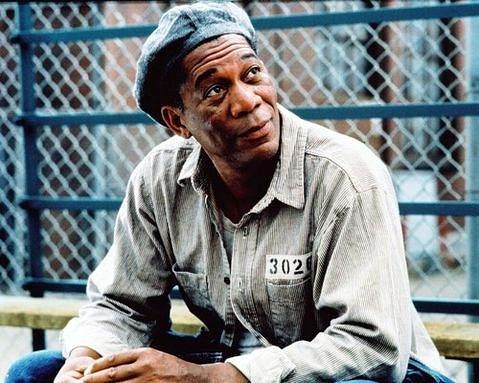
Morgan Freeman as Red in The Shawshank Redemption

A great performance by an actor does not always come from the actor transforming their self to become a character. Sometimes, the actor inhabits the character in a way that it seems the character and the actor are one and the same. This is why the performance of Morgan Freeman as Ellis Boyd Redding aka “Red” in The Shawshank Redemption is so perfect and influential. Irish actor Gabriel Byrne once said, “I've always felt that acting is about exposure. You expose yourself in the choices you make. It's when you present yourself as truthfully as you can, in a given situation, that you are being that character. Even though you're being yourself…all actors essentially play themselves.” (link) This is indeed true of Freeman’s performance in The Shawshank Redemption. I haven’t met anyone who doesn’t absolutely love the character of Red, and synonymously, Morgan Freeman in the movie. The character became the defining role of Freeman’s career, and ever since this role, most of Freeman’s characters have in essence been a repeat or a different version of his character and performance in The Shawshank Redemption. Morgan Freeman was nominated for Best Supporting Actor in 1994 for his performance, but lost to Martin Landau in Ed Wood. Freeman eventually won his Oscar for Best Supporting Actor in Million Dollar Baby, where again he played a very similar character to Red, and I took it as delayed recognition for his performance in The Shawshank Redemption.
The character of Red (Morgan Freeman) is the moral center of the movie and he's also whose character we view most of the story from. Even though, Andy (Tim Robbins) can be said to be the main character of the film it’s really the character of Red who the audience learns most about. When we first meet Red we see him attending a parole meeting after being in prison for 20 years for armed robbery and homicide. Red is very much respected behind bars at the Shawshank Penitentiary and is known as the prison fixer – the man who can get a prisoner anything he wants for a price; including: posters, cigarettes, or a little rock pick. The main story of the film is the friendship that develops between Red and Andy. Through Andy, Red learns what it means for a man to have true moral character, which brings about his redemption in the film. 
Freeman, as Red, never really has any showy acting scenes of the movie, nor should he. Freeman's performance in the film is very subtle, its all about how the man carries himself and the way he talks. Near the end of the movie where Red goes to his last parole board hearing, we see how far the character has grown because of the friendship he formed with Andy. This is one of Freeman's most effective scenes in the movie because we're now watching a man who has acquired true moral character, and the parole board recognizes this too and grants Red his release from prison. If one compares the last parole board meeting to the first parole board hearing (where Red carried himself less assuredly) they can see the subtlety, power, and effectiveness of Freeman's performance. 

            The film employs the use of voice-over from the character of Red throughout the movie. Voice-over in films is usually a cheap overused way for characters to express their feelings, but when used effectively, as in The Shawshank Redemption, it can be quite powerful. Prior to The Shawshank Redemption, Morgan Freeman had never done a voice-over in a movie. Now, Morgan Freeman is known as the actor with the greatest, most assuring voice in movies. He has done numerous voice-overs in films, documentaries, and commercials since it has almost become a cliché when a Morgan Freeman voice-over is used. Freeman’s voice overs in The Shawshank Redemption provide some of the movies most effective insightful moments. His voice is very calm, caring, and reassuring that carries a gravitas that no other actor has. Even though, Morgan Freeman has done many voice overs since The Shawshank Redemption, never has it been used to greater effect than when he first did it in The Shawshank Redemption.
Morgan Freeman as Fast Black from Street Smart (1987)
            While Morgan Freeman has now been type cast as the wise, voice of reason, type character since The Shawshank Redemption, he was not always known as that character. Freeman first became celebrated in movies for his performance as a ferocious street-pimp Fast Black in the 1987 film Street Smart, for which he earned his first Oscar nomination for Best Actor. Pauline Kael, one of America’s most influential film critics, famously asked, after seeing Street Smart, “Is Morgan Freeman the greatest American actor?” Now, since The Shawshank Redemption people might scoff at that question because they think of Freeman playing only one type of role but, if one’s seen Freeman’s earlier and a few of his latter darker roles they know that he’s an actor that does have an incredible range. This is what Freeman says about being type casted as the wise black man in movies, “I've really not meant to get pigeon-holed - not to get bracketed so that my roles were chosen for me. Now I've become and I'm going to ask forgiveness, but I've sort of become the Henry Fonda (an actor known primarily for playing honorable likable characters)… I played a bad guy in a movie and they showed it to an audience - and we're letting an audience tell us what to do now - y'know, and the audience said, 'Well, I don't want him - Morgan can't die!' And I was a thief…in any of these movies I'm seen as this noble, wise, dignified person.” (link
While Morgan Freeman may be a little disappointed that he’s been pigeonholed as certain type of character, he’s made good use of his image and has played many respected figures to high acclaim including: The President of the United States, Nelson Mandella, and even God. People like watching Freeman as characters that are wise, respected, and honorable because that’s what audiences perceive him to be in real-life. It’s hard to question the authority and gravitas that Morgan Freeman carries with him whenever he’s on screen, and that’s what he’ll always be remembered for as an actor. That’s a great quality for an actor to have and employ in his movies, and we should thank Morgan Freeman for his performance as Red in The Shawshank Redemption, for reiterating the wisest advice he'd ever heard from his friend Andy, because when Freeman says it, we truly listen to it.
“Get busy living, or get busy dying” – Red (Morgan Freeman), The Shawshank Redemption

Thursday, February 3, 2011

Heath Ledger as the Joker in The Dark Knight

First Photo Released of Heath Ledger as The Joker
            I remember the polarizing Internet reaction back in July 2006, when it was first announced that Heath Ledger was cast as the Joker. A lot of people were skeptical that the actor best known for movies such as Brokeback Mountain, 10 Things I Hate About You, and A Knight’s Tale was capable of playing one of the most diabolical comic-book villains of all time. Heath Ledger also had the almost impossible task of following Jack Nicholson’s memorable performance of the character in Batman (1989). That skepticism a lot of people felt started to dissipate once the first photo of Ledger as the Joker was released in August 2007. People could tell by this photo that Christopher Nolan, the director of The Dark Knight, and Ledger, were taking a different darker route with the character. This was officially confirmed in December 2007 when the first full trailer of The Dark Knight was released, and the reaction was unanimous - Heath Ledger looks incredible as the Joker and everyone became excited to see his performance. But then on January 22nd, 2008, Heath Ledger was pronounced dead from an accidental prescription drug overdose; and his eagerly awaited performance as the Joker wouldn’t be seen until July 2008. The performance eventually took on a life of its own and is arguably one of the most memorable film performances of all time; aided by The Dark Knight becoming the second highest grossing movie ever at that time, and Heath Ledger winning the best supporting actor Oscar, posthumously, for his performance.
            That story of Heath Ledger’s road to success with the role of the Joker is now the stuff of Hollywood legend. Not since James Dean has an actor become so much more celebrated and revered after his death. That wouldn’t be the case though if it wasn’t for good cause. After his death, Ledger’s performance as the Joker was hyped up to the max. In most cases over-hyping and getting that excited about something almost always leads to disappointment. This was not the case when The Dark Knight was released in July 2008. Critics and audiences universally loved the movie, scoring an extremely impressive 94% rating on rottentomatoes.com (a movie review compilation site) and it was the highest grossing opening weekend for movie ever at the time earning $158 million. It was also agreed by critics and audiences that Ledger’s performance was the best part of the movie and it is said to have made the movie a pop-culture event that everyone must see.
            So what was so great about this performance that made it deserve all these accolades and universal praise for it? There were those who thought it was because of the fact that Heath Ledger had tragically died at the young age of 28. [That Ledger had now become a Hollywood saint with everyone jumping on the bandwagon eulogizing his performance.] They were proven dead wrong when they actually saw the performance. Ledger’s performance as the Joker is a case when an actor is able to completely disappear as the character and almost become unrecognizable. It helps too that the Joker is wearing white make-up on his face and green hair throughout the movie, which gives the actor more opportunities.  Ledger commented about this saying, “There's something about the metaphor to work behind a mask and from within a mask always gives you the license to do whatever you want or the freedom, free of feeling like you're being judged or viewed and so I'm literally wearing a mask now which empowers me twice as much to kind of feel free and feel unrestrained here and it's pretty exciting.” (link)
            The Joker is one of the most unrestrained psychopathic characters ever depicted in all of fiction; he’s: unpredictable, smart, violent, chaotic, and downright evil. To portray and make sure all those aspects of his character came through, Ledger prepared himself thoroughly and meticulously detailed his performance. To prepare for the character Ledger reportedly hid himself away in a hotel room for about 6-weeks, where he researched the psychology of the character and developed every mannerism the Joker would have including his voice and, most importantly, his laugh. Ledger had this to say about his preparation process, “It’s a combination of reading all the comic books I could that were relevant to the script and then just closing my eyes and meditating on it, …(I) locked myself away, formed a little diary and experimented with voices — it was important to try to find a somewhat iconic voice and laugh. I ended up landing more in the realm of a psychopath — someone with very little to no conscience towards his acts. He’s just an absolute sociopath, a cold-blooded, mass-murdering clown, and Chris has given me free rein. Which is fun, because there are no real boundaries to what The Joker would say or do. Nothing intimidates him, and everything is a big joke.”
            The hard work and joy Ledger put into his character is certainly evident and translates to the screen when we see his performance. The Joker talks in a grim mischievous voice that always gravitating from a low to a high pitch that’s very unsettling and captivating. In the most noticeable, unnerving and entrancing mannerism that Ledger added to his interpretation of the Joker is that he’s always licking and smacking his lips. This aspect of the character shows that the Joker is always relishing and enjoying the mayhem he’s causing. The Joker is almost always very animated in his body movements and hand gestures whenever he’s on screen. He moves in a very distinctive manner, in a sly gauntly way. This makes the character more threatening as if he’s ready to attack you at any moment. If you add all these elements together:  the frightening appearance of clown with scars carved into his face, the mischievous unrecognizable voice, the tic of licking his lips with his tongue, and his unpredictable sly movements and gestures; what you get is one of most frightening and fascinating villains ever to be seen on film, at least since Dr. Hannibal Lecter.
            Some people have even suggested that Ledger immersed himself so much in the role of the Joker, that it eventually lead to his state of mind that caused his untimely death. I find that idea absurd because, first, Ledger was already halfway thru filming another role (in The Imaginarium of Dr. Parnassus), and because he’s a professional actor. The director of The Dark Knight, Christopher Nolan, said this in response, "I'll answer that simply to say that diminishes his skill as an actor. The job of an actor is someone who takes on a character and distinguishes between real-life and a character. Anyone who's spent time on a movie set knows that it's a very artificial environment and the great skills of someone like Heath Ledger or Christian Bale, all these guys, is that they can be jobbing along in a workday environment and then when the camera rolls they can find this great character." (link 
            While it’s impossible to know for certain; I’d say it’s likely that Heath Ledger’s interpretation of the Joker would’ve been just as acclaimed if he hadn’t died. This is a performance that’s too loud, unique, frightening, revolutionary and real for it not to be noticed. Of course, the performance would not have been as scrutinized and hyped up if Ledger hadn’t died and people would’ve been more focused on the character rather than the actor. But when a person is actually watching the movie, they’re likely to get so caught up in it  that they'll forget that it’s Heath Ledger (dead actor) playing the Joker and just see the character. Only a performance as strong and distinctive as Ledger’s Joker could have made that possible.
            I predict in the many years to come, that people will always remember Heath Ledger’s performance as the Joker as one of the most terrifying villains ever created for film. The fact that this was the last role Ledger completed before he tragically died will have become an afterthought, but the performance will always live on.
.

Wednesday, January 26, 2011

Jesse Eisenberg as Mark Zuckerberg in The Social Network


            Mark Zuckerberg was one of the most talked about people of 2010; he was Time magazine’s person of the year. What made everyone start talking and wondering about the 26 year-old billionaire who created the social networking site Facebook, was because of the compelling portrayal they saw of Mark Zuckerberg played by Jesse Eisenberg in the movie The Social Network. On Tuesday, January 25th, 2011, the Academy Award nominations were announced and Jesse Eisenberg received his first Oscar nomination for Best Actor for his depiction of Zuckerberg.
The Social Network tells the story of how Zuckerberg created Facebook with his closest friend and co-founder Eduardo Saverin (Andrew Garfield) and how their friendship unraveled in the process; as well as the legal battles of ownership over the website that followed. The actual Mark Zuckerberg has seen the film and he suggests it is mostly a dramatization of what actually happened. Zuckerberg states, “They frame it as if the whole reason for making Facebook and building something was because I wanted to get girls. They (the filmmakers) just can't wrap their head around the idea that someone might build something because they like building things."” Zuckerberg goes on to state what the film actually got right, “It's interesting what stuff they focused on getting right, like, every single shirt and fleece that I had in that movie is actually a shirt or fleece that I own.” Overall Zuckerberg’s thoughts on the movie are, “It's a movie, it's fun [...] I can promise you, this is my life so I know it's not that dramatic. The last six years have been a lot of coding and focus and hard work, but maybe it would be fun to remember it as partying and all this crazy drama." (link)
A lot of people and critics have perceived the film’s portrayal of Mark as unflattering saying that he’s portrayed as a “borderline-autistic conniver” and that he’s hampered by sexual insecurity. Others have described Eisenberg’s Zuckerberg as “an anti-hero for our times.” The different interpretations and perceptions people have of the character of Mark Zuckerberg are due to Jesse Eisenberg’s complex and layered performance.
Most of the time when an actor is portraying a real live person they can meet the actual person and study their mannerisms and ask the person questions about their life experiences. An actor can then use this real-person as a tool to help them learn how to mimic them or as a way to help shape or guide their performance. Jesse Eisenberg didn't meet Mark Zuckerberg until after the movie was released; Zuckerberg refused to participate in the film because he didn’t approve of the script. Eisenberg did study whatever material he could get his hands on, but there wasn’t a lot.
“I got every audio clip, picture and video I could find and it helped me in the preparation process. But the script was so wonderful, the characterization by Aaron was so wonderful that there was enough to use,” Eisenberg stated.
David Fincher, the director of The Social Network, is known somewhat as perfectionist director who likes do a lot of takes. The opening 5-minute scene between Mark Zuckerberg and his girlfriend was a 10-page long script scene, and Fincher did 99 takes of the scene. Fincher said he did so many takes in order to ease the actors into the language of Aaron Sorkin's script, so the dialogue would flow naturally out of the actors. This was indeed true inJesse Eisenberg's case who was able to take all the character's fast talking ramblings and verbal quips/comebacks and make them his own. While the character of Mark may at times seem ruthless and appear to have a lot of pent up aggression in him, there are moments during these bouts of anger that you see the sadness of the character in Eisenberg's performance.
“It was immediately clear to me how things should be played and what his loneliness was and how sad he was even though his behavior appears angry,” Jesse Eisenberg says. (link)
The greatest quality about the character of Mark Zuckerberg in the film is his drive to do something great, and during the scenes where Zuckerberg is shown coding and actually creating Facebook, Eisenberg conveys the incredible drive and passion of the character. Eisenberg said he viewed these scenes of Mark coding as the equivalent of Michelangelo creating the Sistine Chapel, which he feels was how Mark felt creating Facebook. One of the most poignant scenes of the movie is when Mark first launches the facebook site. During this moment Mark goes into a trance-like state and closes his eyes, Eduardo asks Mark if he is praying, and we feel, through Eisenberg’s performance, how much the site has meant to him.
Throughout the majority of the movie, Mark Zuckerberg is seen mostly as an emotionless guy. We see him getting angry in the deposition scenes (a few times in the film) but Mark, for the most part, is a one-note character. If an actor didn’t embody this character as fully as Jesse Eisenberg did, we wouldn’t care or be as invested as we are in the movie. We see, through Eisenberg’s performance, that Mark is a guy that feels most comfortable coding. When he’s not coding, like when he’s at a party, Mark is out of his element and doesn’t know how to act socially. (In the opening scene of the movie, where Mark goes on a verbal rant about getting into a Harvard finals club and insults his girlfriend, she breaks up and calls him an “asshole”. There’s a small moment after this, where we see how hurt Mark is by these remarks.) He truly doesn’t mean to act like an asshole, that’s just how he acts in uncomfortable social situations.
In the most heartbreaking and pivotal scene of the movie, where Eduardo confronts Mark about the liquidation of his shares in the company of Facebook, we see how empathetic Mark is about what he did to his friend. Mark did what he thought was best for his company and wouldn’t allow his friendship to get in the way of running his company the way he wanted it. This is Eduardo’s most pivotal scene and actor Andrew Garfield’s highlight acting moment in the movie. Eisenberg is able to steal this scene from him as Mark, because when he does finally show some of his bottled up emotions, it’s touching to watch.
The character of Mark Zuckerberg in the movie The Social Network was quite possibly the most compelling film character to come out of 2010. Whether it’s very close to the truth of who the actual Mark Zuckerberg was or not at all, does not really matter. Jesse Eisenberg created a character that could be viewed in a variety of different ways. One person might see his performance as being a manipulative, conniving jerk who possibly planted false stories about his friend because he was jealous that he didn’t get into a Harvard club. While another person could see the same performance and see a character that was incredibly smart and passionate, who had as many strengths as he did faults.
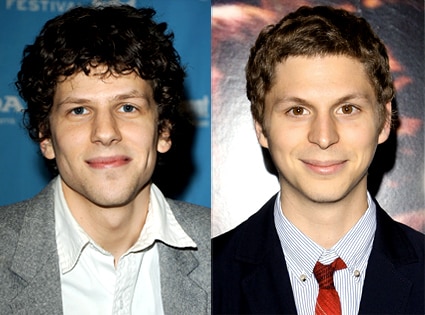
The Mark Zuckerberg that was presented in the movie The Social Network was a fully developed three-dimensional character that one cannot classify easily. I’m hoping that on February 27th, Jesse Eisenberg can upset the favorite, Colin Firth, and win an Oscar for his performance. To some people, Jesse Eisenberg used to be known as “the other Michael Cera” because they both look alike and play similar kinds of nervous awkward characters. Now, Jesse Eisenberg has given a performance that will be the defining role of his career and Michael Cera has become the other less talented Jesse Eisenberg.

Wednesday, January 19, 2011

Robert De Niro as Travis Bickle in Taxi Driver


             Travis Bickle is a character in movies that has endured for over 30 years and who will never be forgotten. This is not only because of the unfortunate repercussions the performance is now linked to, but also because of Robert De Niro's terrifying realistic performance of this unsettling character.
Taxi Driver was released in 1976 and was directed by the legendary director Martin Scorsese. The film was well reviewed at the time and it received four Oscar nominations for Best Supporting Actress Jodie Foster, Best Screenplay by Paul Schrader, Best Picture, and Best Actor for Robert De Niro. The film has not only stood the test of time but is now regarded as a classic American film of the 1970s and was ranked #47 on AFI's list of the 100 Greatest American Films.
The story of Taxi Driver follows Travis Bickle who is a lonely Vietnam veteran and is a looking for a job in New York City. Travis gets a job as a cab driver and through his job he becomes disgusted with the city of New York. Travis sees the worst the city has to offer: teenage prostitution, unsavory neighborhoods, and the general filth of the city. Travis later remarks to a Presidential Candidate that, "I think someone should just take this city and just... just flush it down the fuckin' toilet."
The central theme of Taxi Driver is loneliness and what loneliness can do a to an unhinged man doing a job where he sees the worst of human life. Travis remarks to himself that, "Loneliness has followed me my whole life, everywhere. In bars, in cars, sidewalks, stores, everywhere. There's no escape. I'm God's lonely man." Travis tries to get himself out of his despair in a couple different ways. First, Travis becomes obsessed with a woman named Betsy (Cybill Shepard) who works at the same Presidential candidate's campaign office. Travis asks Betsy out on a date and she accepts, but in a hilariously awkward scene Travis chooses the worst date location possible and takes Betsy on a date to see a pornographic movie. Betsy is offended by this and decides she never wants to see Travis again.
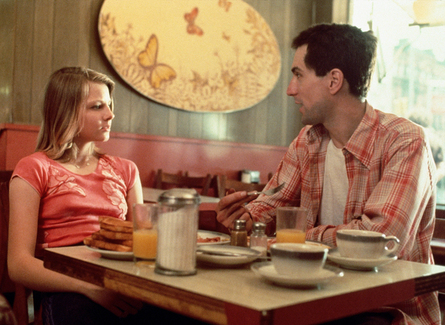
Travis then decides he needs to do something great with his life and believes he should go assassinate the Presidential candidate that Betsy is working for. When that plan fails Travis decides to put his energy into saving a 13-year-old prostitute named Iris (Jodie Foster) from her domineering pimp.

Iris (Jodie Foster) with Travis Bickle (Deniro)
 This is not a performance where you ever really see Robert De Niro acting, he simply is Travis Bickle. To get into character De Niro actually drove around cabs in New York City for 12 hours a day for months. He also studied various kinds of mental illness that pertained to Travis's condition.
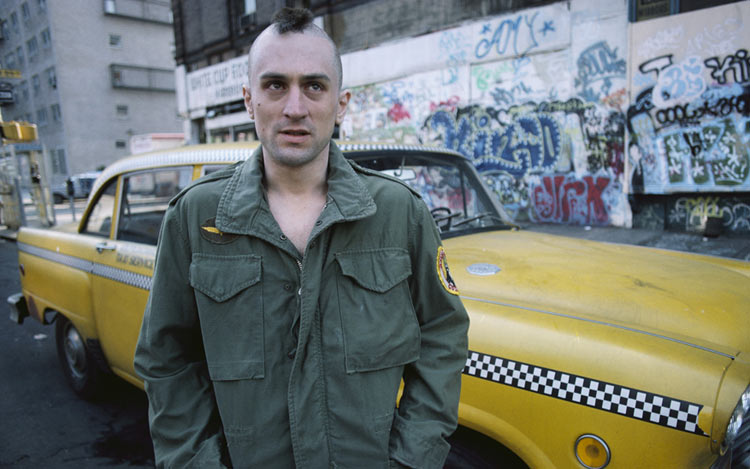
Even though, Travis Bickle is a showy character who does a lot of questionable acts, De Niro's performance is never theatrical. De Niro conveys Travis's anguish and feelings mainly through his body language which is usually contorted, or through glances with his eyes. He also speaks in a very monotone voice to express Travis's apathy and depression. The character of Travis goes through a rapid transition a little over halfway through the film when Travis decides he needs to get in shape and he cuts his hair into a Mohawk in order to prepare himself to assassinate the Presidential candidate. During these scenes where we watch Travis training and getting into shape, we also see a mental transition in De Niro's performance. De Niro's body posture and eyes become much more straight and direct, as we witness Travis becoming a much more focused and confident man, who now has a definite mission in his life. It’s absolutely frightening to watch De Niro's performance from a lonely pathetic though relatively harmless Travis becoming a driven lunatic. This is because through De Niro's performance we truly get to know and may even sympathize with the lonely Travis, but once Travis truly becomes the loner lunatic assassin we suddenly get a new perspective on how a real life person like John Hinkley or the recent Tucson shooter Jeremy Loughner could get to this state of mind.
John Hinkley Jr.
In fact, in the years leading up to John Hinkley Jr.'s attempted assassination attempt on Ronald Reegan he was obsessed with the movie Taxi Driver. Hinkley had seen the movie over 15 times and became infatuated with the actress Jodie Foster, who in the movie plays the 13-year-old prostitute Travis is trying to save. Hinkley thought that Jodie Foster might appreciate him if he assassinated President Ronald Reegan because Foster was not very supportive of Reegan's conservative policies.
Jeremy Loughner
I firmly do not believe we can condemn the movie Taxi Driver for Hinkley's action. Hinkley was probably always going to become a disturbed loner mad man who turned violent. What we can see in Taxi Driver is why John Hinkley identified so strongly with Travis Bickle through De Niro's extraordinary performance. While we may not want to ever identify with a person like John Hinkley or Jeremy Loughner it is helpful to understand the human condition that could possibly drive a man to do something so awful. And through De Niro's performance we see the process firsthand and its incredibly believable.
The most famous scene of Taxi Driver and one of the most famous movie lines in all of cinema,
"You talkin' to me? You talkin' to me?"
was actually an improvisation from Robert De Niro. Scorsese had De Niro stand in front of a mirror with a gun and say the first things that came to his mind, and because De Niro was so invested in his character he was able to come up with one of the greatest and most memorable lines in all of movies. 

While many actors since have portrayed mad-men loners who want to assassinate a political or important social figures; no actor has ever done it so startling and convincingly as Robert De Niro. De Niro's performance as Travis Bickle is one of the most powerful performances of all time, never have I witnessed an actor explore such an unsavory character with so much depth and understanding. Now, whenever I see reports of a loner gun man on the news I think of Travis Bickle.
To learn more about the connection between John Hinkley Jr. and Taxi Driver click here.
To learn more about the movie Taxi Driver click here.